
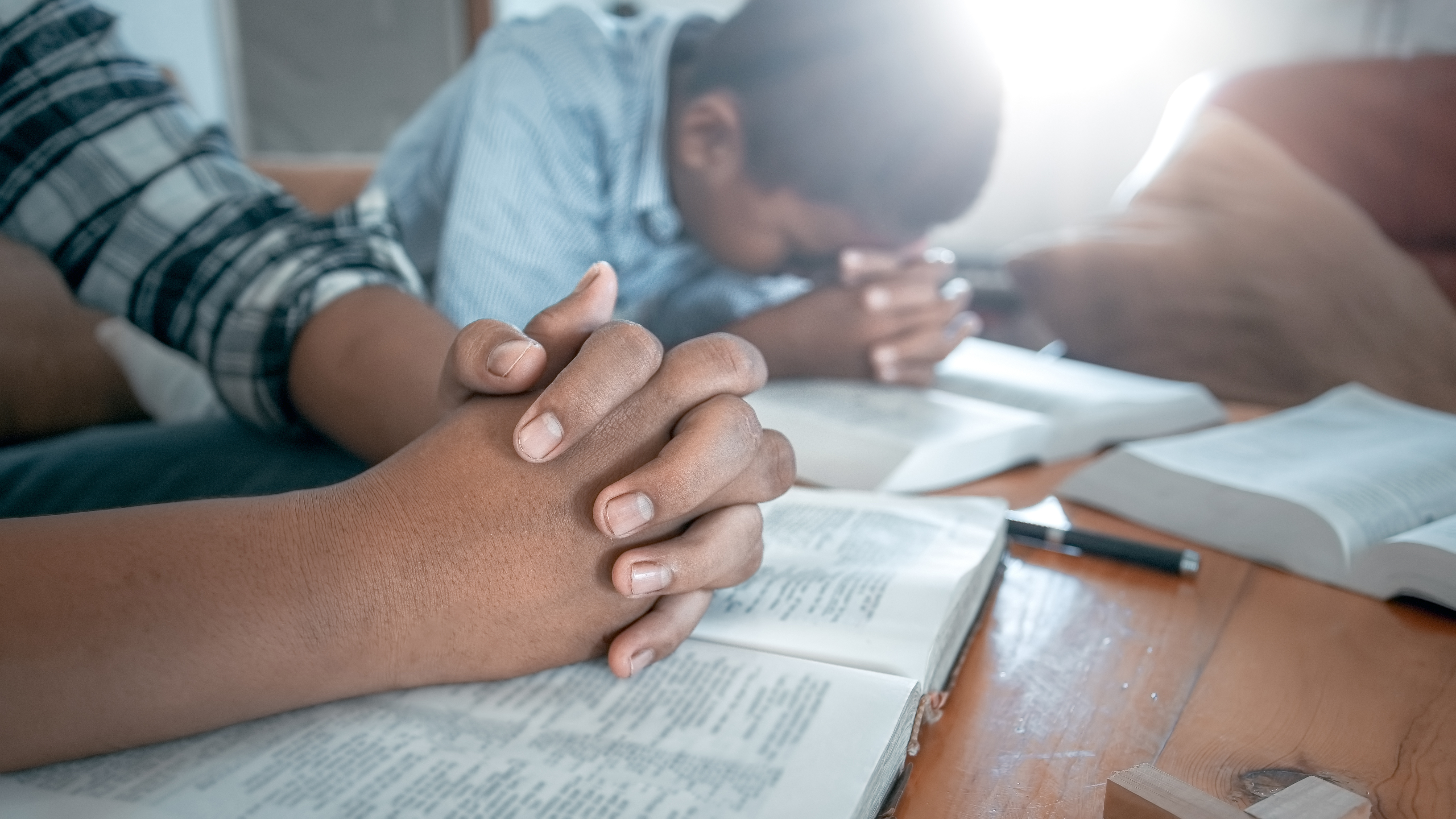
Last week we talked about adapting family devotions for the child who can't read the words or sit still. Now let's talk about the child sitting next to them, the one who can. Sometimes that child has started to dread Bible time.
They may not say it. But you might see it in the sigh when you call everyone together, the half-listening, the "why do we have to do it this way?" Or they'll say something like: "It's boring. It's baby stuff. It always ends with [sibling] melting down."
It's easy to hear that as a spiritual problem. However, it might be a fairness problem.
What it looks like from their chair
In September, we talked about equipping the neurotypical sibling without parentifying them. Family Bible time is one of the places where that line may get crossed without us noticing.
From the sibling's seat, devotions can look like this:
The material is pitched to their brother's level, not theirs.
Every session gets interrupted, and they're expected to wait patiently.
Their questions get shelved because there's no room for them.
They're asked to "set an example," which means the time is about someone else.
They aren't rejecting God. They're rejecting a time that was never really built for them.
When everyone wants a turn
In our family, we worked hard to make sure everyone was heard. We welcomed questions and discussion. We also had the world's longest devotional times. One child would ask a question, then another would interrupt while we were answering. Feelings got hurt because someone was interrupted again. Apologies were given, and we'd continue on. I loved that our kids wanted to participate, but it was like a merry-go-round ride that wasn't very merry. It was exhausting.
Looking back, it was the same need in a different shape. Every child wanted to be heard, and in a free-for-all, nobody quite was. Openness needs some structure:
One voice at a time. A talking object (a stone, a small cross, a stuffed animal) settles whose turn it is without a parent playing referee.
Finish one question before taking the next. Big questions that would derail everyone go in a notebook to be answered later, and then actually answer them.
Set an end time and keep it. A devotional time that might last an hour is hard to sit down to. It's better to cover less material and fewer verses with great engagement than to insist on finishing the passage.
Don't provoke them to discouragement
Paul wrote, "Fathers, do not provoke your children, lest they become discouraged" (Colossians 3:21). Discouragement is the right word. The resentful sibling isn't defiant so much as deflated. Faith time has become one more place they come second. And sometimes, they don't show it, but it may be there even though they are trying to be the good sibling that doesn't stir up trouble. We must make sure they know they are just as important.
Giving them a seat at the table
Give them their own time. Even ten minutes a week of one-on-one Scripture at their level tells them their faith matters on its own terms. This is the single biggest fix.
Let them go deeper. If the family reads a story, give the older or more capable child the harder question, the cross-reference, or the original context to look up.
Offer them a role, not a burden. Some kids love leading the song or choosing the verse. Ask; don't assign. And never make them the behavior manager.
Let them be honest about it. If they say it's boring, ask what would make it better, and change something.
Teach the child. Instead of holding on to an agenda or focusing on a perfect devotional time together, we can focus on teaching our children where they are. When that's our goal, we can relax and enjoy the Holy Spirit leading our time together.
What you're protecting
The goal isn't only a smoother devotional time. It's a child who grows up associating God's Word with being seen, rather than with waiting their turn. When that child is grown, you want them to remember Bible time as the place where Mom or Dad made room for their questions too.
Listen next: When Your Neurotypical Child Becomes the Third Parent — An honest interview with my daughter Annie.