
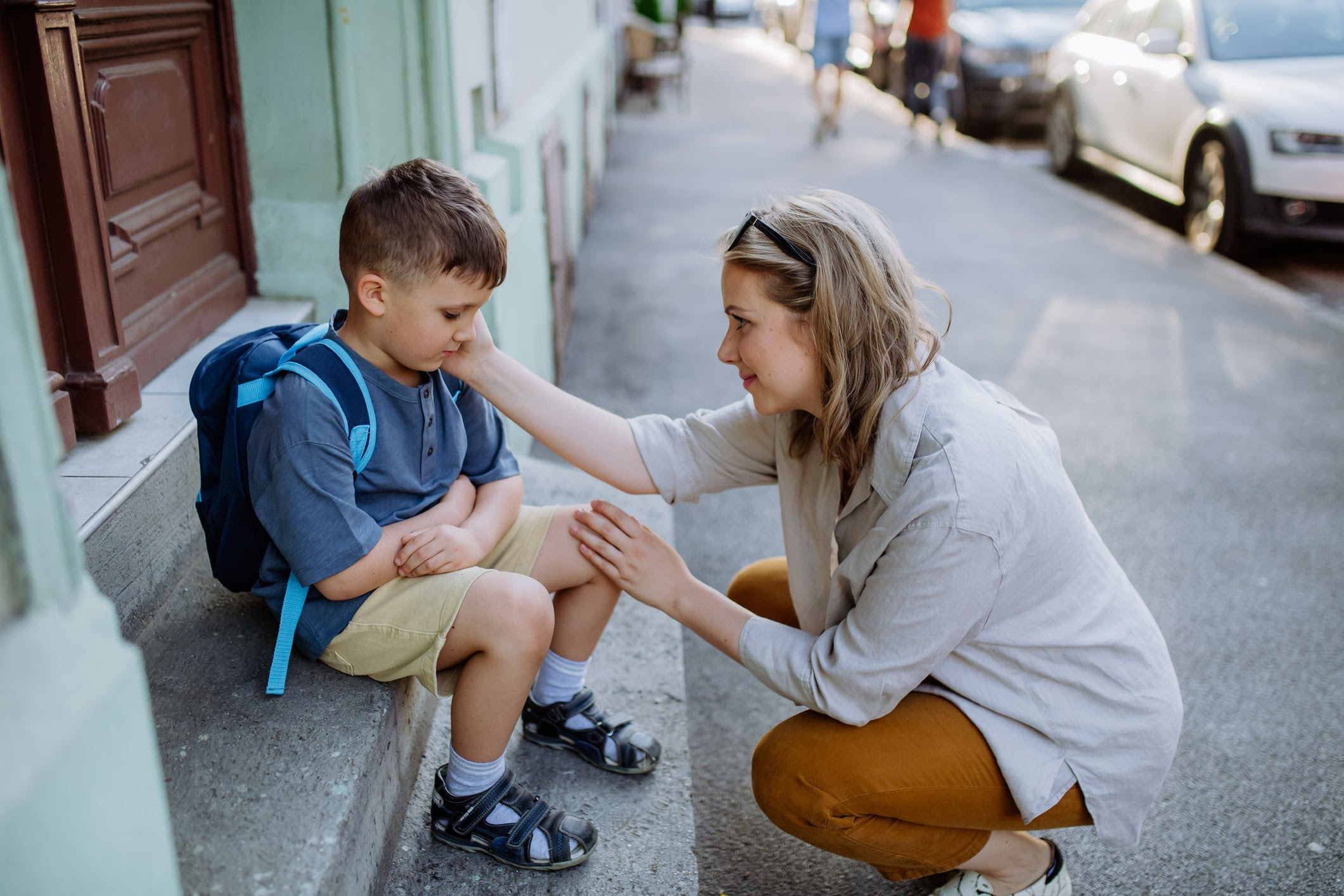
We may picture it happening in a college lecture hall. A professor, a hard question, our grown child standing up for what we taught them.
It almost never happens that way. It happens at eleven, in a group chat, or eight minutes into a video, from someone funny and confident who has clearly thought about this more than your child has. And it isn't always an argument. It may only be a tone — the sense that people who believe this are a little bit stupid, and everyone already knows it.
There are two ways we tend to lose our kids here, and both of them come from love.
The first is shutting the question down. It comes out as “we don’t talk like that in this house,” or a flinch, or a fast redirect. What the child learns is not that the question is wrong. What they learn is that the question is dangerous — that our faith is a thin thing that cannot survive being poked. So next time they don’t ask us. They ask the internet, which is more than thrilled to answer.
The second is answering it too well. This one looks like faithfulness. They ask, and we produce a complete, well-organized response, and we are so relieved to have one. But a child who receives our answers has our faith. A child who is walked through the reasoning has a shot at their own.
Peter is writing to people under pressure, and here is what he tells them:
“Always be prepared to make a defense to anyone who asks you for a reason for the hope that is in you; yet do it with gentleness and respect.” (1 Peter 3:15, ESV)
We quote the first half constantly and drop the second, which is a shame, because the second half is the harder instruction and the one our kids are watching for. Not “win.” Not “have a comeback.” Be ready, and be kind while you do it. That is a much taller order for an anxious twelve-year-old, and it is also the only version that will still be recognizable as Christianity by the time they are twenty.
What this looks like at home:
When the question comes, do not flinch. Your face is the first answer they get, and they read it before they hear a word. “That’s a good question” — and mean it — is everything.
Say “I don’t know” when you don’t know, and then go find out together. This is not a failure. It's a demonstration that the questions can be asked, and we can find the answers we don't know. We don't fear that at all.
One sentence, not a lecture. When we over-answer, kids learn that questions cost too much of their time and energy. They aren't seeking an exhaustive (and exhausting) dissertation in response to their genuine curiosity.
Ask them what they think first. This is the whole August thread showing up again: kids who can reason can hold a faith they own. Kids who can only recite are borrowing ours, and borrowed things get returned.
There is a version of this that hits hard in our families, and I don’t want to skip it.
At some point, someone is going to ask your child why God made them like this. Or your child is going to ask you. Not as a debate or intellectual exercise but as a real question, from a real kid, about their own body or their own brain, or about the sibling whose life is harder than anyone’s should be.
I don’t have a tidy answer for that, and I would be careful of anyone who does. The tidy answers are what break faith later, not what protects it. “God gives special children to special parents” collapses the first time your child does the arithmetic on it. “Everything happens for a reason” asks a suffering kid to be grateful for the suffering.
What I can say is that a child can survive an unanswered question far better than a dishonest answer. You can tell them the truth: that God is good, that you do not fully understand this, that you have asked Him too, and that you are not going anywhere while they wrestle with it. That is not a weaker answer. It is the only one that will still be standing when they are thirty.
This month’s podcast episodes go deeper on this — and if you missed August’s two-part series on teaching a child to think, this is exactly what all that reasoning practice was for.