
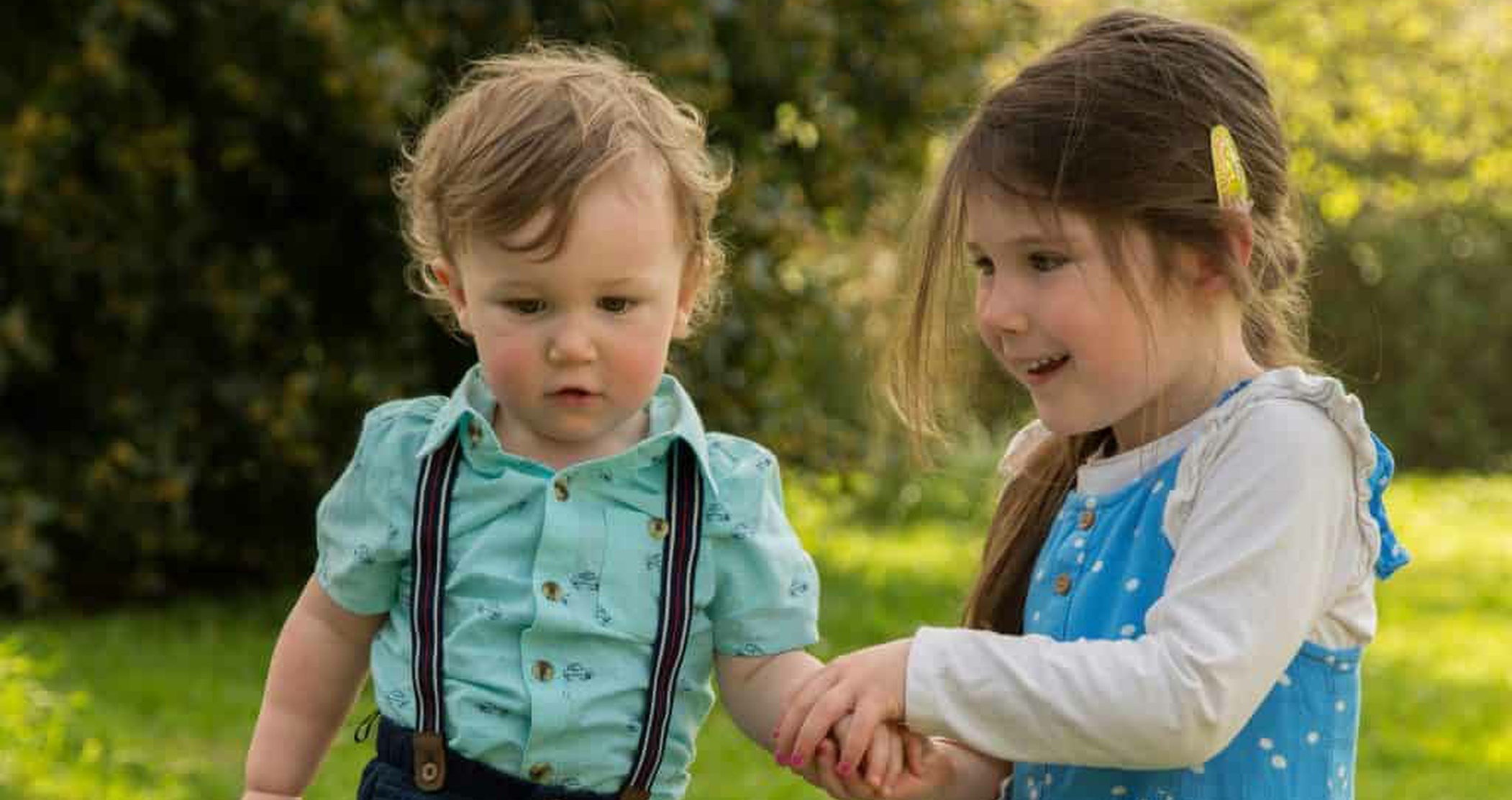
Part of our March Identity Series: “Rooted Identity” for Mixed Needs Families.
Her name was Emma. She was nine years old, and she had learned to disappear.
Not literally — but she had mastered the art of being low-maintenance. She didn’t melt down. She didn’t need a visual schedule. She turned in homework on time, said please and thank you, and went to bed when she was told. She had figured out, somewhere in her small-child logic, that the family’s emotional bandwidth was already spoken for.
Her brother had significant needs. Her parents loved her deeply. And Emma was slowly building an identity around being the one who didn’t need anything.
That identity will follow her.
The Identity Nobody Assigns — But Kids Pick Up Anyway
We talk a lot in mixed-needs families about helping our neurodivergent children understand who they are. We worry about the labels sticking too hard. We pray over their identity in Christ. We remind them that they are more than their diagnosis.
We rarely have the same conversation with their siblings.
But neurotypical siblings in mixed-needs families are forming identities too — and those identities are being shaped by the family’s daily reality whether we’re intentional about it or not. The roles they fall into aren’t assigned. They’re absorbed.
The Capable One. The Easy One. The Peacemaker. The Invisible One. The One Who Holds It Together. The Little Helper.
None of those are identities rooted in Christ. All of them can feel like faithfulness.
What This Looks Like
It doesn’t announce itself. You won’t see it in a single moment. You’ll see it in patterns:
The child who stops asking for things because asking feels selfish when their sibling needs so much.
The teenager who takes on a caretaker role — calming their sibling, translating for them in public — and starts to define themselves by their ability to handle hard things.
The kid who becomes the family comedian, keeping things light, because they’ve learned that their emotional needs are least welcome when things are already heavy.
The child who is simply quiet. Compliant. Present. And slowly, quietly deciding they don’t matter as much.
The child who finds places to be like extracurricular activities, study groups, friend’s homes, or even church. But they are rarely home, and when they are, they stay “out of the way.”
These aren’t dramatic warning signs. They look like good kids. And that’s exactly why it’s easy to miss.
Identity in Christ Is Not Automatically Inherited
Here’s the hard truth: telling your neurotypical child that their identity is in Christ is not enough if the daily message their life sends them is that their role is to hold the family together.
Identity formation isn’t primarily what we say. It’s the story a child tells themselves about who they are, built from thousands of small daily experiences. If the daily experience is that their needs come last, that they are most valuable when they are most manageable, or that their job is to compensate for the chaos — that becomes the story.
Faith doesn’t overwrite that story automatically. It has to be spoken directly into it.
What Parents Can Do
This doesn’t require a complete overhaul of your family life. It requires intentionality in small, repeatable moments.
1. Name their identity separately from their role.
There’s a difference between telling your child “You’re so good with your brother” and “You have a gift for compassion that God put in you — and it’s yours, not just for your family.” One locates their identity in what they do for someone else. The other roots it in who God made them to be.
2. Create space that is entirely theirs.
This means more than a bedroom. It means conversations that are only about them — their interests, their questions, their struggles — where their sibling’s needs don’t enter. It means occasional one-on-one time that isn’t cancelled when their sibling has a hard day. Predictable, protected, theirs.
3. Make room for their grief.
Neurotypical siblings often carry quiet grief — over missed events, shortened family trips, wanting a “real” relationship with a sibling that doesn’t feel different from what their friend have with their siblings, and the parent attention that gets redirected. That grief is real and it is legitimate. When we treat it as ingratitude (even subtly), we teach them to bury it. When we name it, we teach them that their feelings have a home in this family.
4. Speak their specific identity out loud.
Not just “I love you.” Not just “You’re a good kid.” Specific, observed, God-anchored: “I’ve been watching you this week, and I see how curious you are about how things work. God made your mind to ask good questions. That’s not an accident.” Children who hear specific language about who they are have something to hold onto when life is hard.
The Longer View
Emma grew up. She married young, someone who needed a lot. She spent years not knowing what she actually wanted because she’d never really been asked.
This is not inevitable. But it is what happens when identity formation is left to circumstance.
Your neurotypical child is watching this family and drawing conclusions about who they are in it. The question isn’t whether they’re forming an identity — they are. The question is whether you’re in that conversation.
Every child’s truest identity is in Christ. That truth needs to be spoken directly to every child in our homes — including the one who seems like they’re doing just fine.
This is part of our March series on Rooted Identity. Next up: what it looks like when a child’s identity gets swallowed by a diagnosis — and how to speak their real name back to them.