

Part of our March Identity Series: “Rooted Identity” for Mixed Needs Families.
Somewhere between the first surgery and the third IEP meeting and the years I didn’t sleep through the night, I stopped being able to answer the question: "Who are you?"
Not because I was depressed. Not because I’d made some terrible mistake. Just because the answer I used to have — the girl who dreamed of being a writer since second grade, who felt called to something, who had her own interior life — seemed to belong to a different person. Someone with more time. Someone whose calendar wasn’t held hostage by endless doctor appointments and school meetings and the particular logistics of raising children who needed more than the average child needed.
I remember wondering, at some point in those years, whether I was even the same person I thought I was before kids.
I think a lot of you know exactly what I mean.
The Specific Weight of Mixed-Needs Motherhood
Every mother loses some of herself in the early years. That’s not unique to us. But there is something particular about raising children with significant needs — something that goes beyond ordinary busyness and into a sustained, years-long redirection of nearly everything you have.
Two of my children were born with clefts. The surgeries started early and kept coming. Then came the autism and ADHD diagnoses, and everything that follows those — the learning curves, the therapies, the advocacy, the grief you don’t expect and don’t have language for. Meanwhile, my neurotypical daughter was a social butterfly with a full life of her own that also needed tending. There were years when I felt pulled in fifteen directions simultaneously, and the direction labeled “Terrie” was always the last one I got to.
Then Annie, my neurotypical daughter, — the easy kid – nearly died from anorexia. And whatever reserves I thought I had left got redirected again.
I’m not telling you this for sympathy. I’m telling you because I want you to know I’m not writing from a comfortable distance. And I’m telling you because the specific texture of that kind of motherhood — the kind where the crises are real and serious and don’t resolve quickly — does something to your sense of self that ordinary busyness doesn’t.
It doesn’t just occupy your time. It occupies your identity.
The Trap You Don’t See Until You’re In It
Here is what I didn’t fully understand while I was in it: I was not just doing the work of mothering. I was becoming the work of mothering. The role and the person had merged so completely that I couldn’t locate the seam between them.
This happens gradually. It’s not a choice, exactly. In a mixed-needs family, the needs are real and urgent, and the margin is genuinely small. Of course you redirect toward your children. Of course you set yourself aside. In many seasons, that is simply what love requires.
But there’s a difference between setting yourself aside for a season and losing the thread of who you are. One is sacrifice. The other is a slow disappearance that you might not notice until the season finally changes — and then you look up and don’t recognize the landscape.
Here’s what I was not prepared for: the season does change. The kids get older. The acute crises resolve or stabilize. The logistics ease a little. And instead of relief, some of us feel something closer to disorientation. The structure that held everything together — the need, the urgency, the role — is loosening. And underneath it, the question resurfaces:
Who am I now?
I thought I’d feel free. Instead, I felt lost. After all that time waiting for space to breathe, I didn’t quite know what to do with it.
What I Wish Someone Had Told Me
Your identity doesn’t disappear during the hard years. It goes underground.
God is tending it even when you can’t. The girl who dreamed of being a writer since second grade — she didn’t die when the surgeries started. The calling you felt before children — it didn’t evaporate during the IEP meetings. Those things were being held in trust. But you have to stay in enough contact with them to recognize them when they resurface.
I finished my master’s degree during those years. Not because I had extra time — I did not have extra time. But because staying connected to something that was mine, that had nothing to do with managing a diagnosis or navigating a crisis, was part of how I stayed a person and not just a role.
I had a husband who took the kids so I could have time alone. I had good friends. I was genuinely blessed in those specific ways, and I don’t want to pretend otherwise. Not everyone has that, and the isolation of mixed-needs motherhood is its own real grief.
But even in the hardest seasons, there are small acts of identity-tending that matter:
Stay in contact with your calling, even in miniature.
You don’t need to write a book during the years of surgeries and crises. But you might need to write one paragraph, or keep one journal, or hold the dream loosely rather than putting it in a box labeled “later.” Later can have a way of never arriving.
Let God define you before the need does.
In a mixed-needs family, the need is loud. It is constant. It will define you if you let it. The needs are urgent and real. The counterweight is time in Scripture — not as another item on your checklist, but real time sitting with the question of who God says you are, independent of what anyone needs from you today.
Tell the truth about the cost without losing the gratitude.
I loved my life, even in the trenches. That is genuinely true. And I also lost myself in it for a season. Both of those things are true at the same time. You don’t have to choose between honesty about the cost and gratitude for the life. In fact, the woman who can hold both is the one who has the most to offer the women coming up behind her.
Don’t wait for the quiet season to start the identity work.
This is the part I most want you to hear. I spent years thinking I’d find myself again once things calmed down. What I found instead was that the quiet season had its own disorientation — that identity work deferred doesn’t get easier, it just gets stranger. The time to stay connected to who you are is now, inside the chaos, in whatever small ways are available to you.
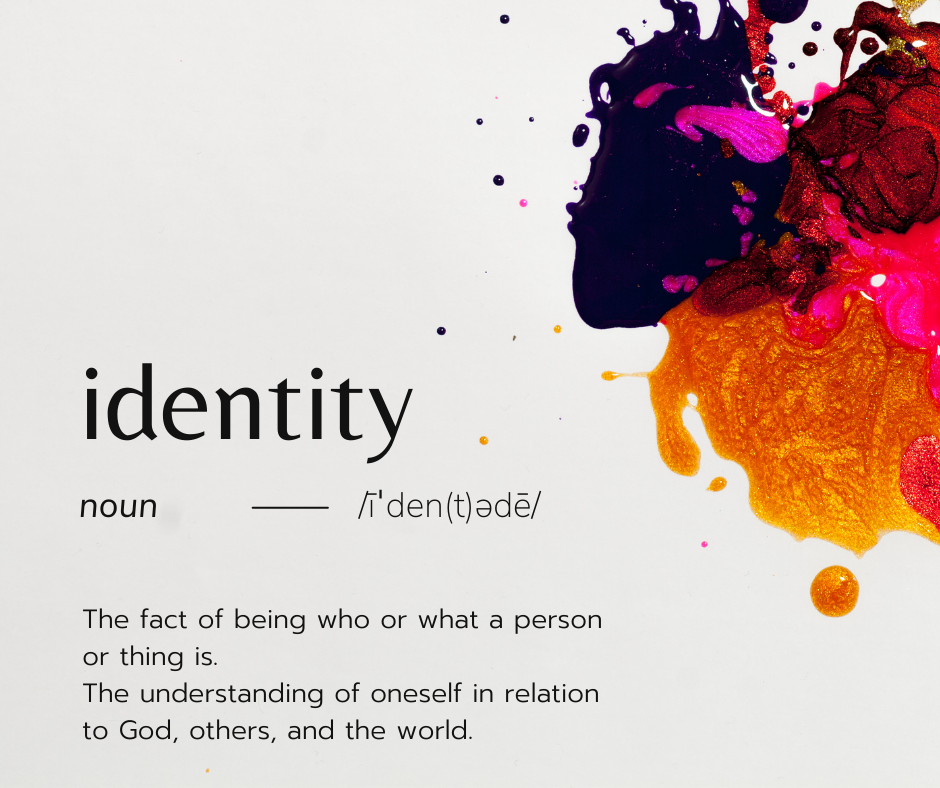
On the Other Side
I am writing this as someone who lives on the other side of those years. My children are grown and finding their footing. The dream I had in second grade — to be a writer — is now my actual life. The calling I thought had passed when we left Taiwan to help our kids get settled in the United States now has us in Thailand and is still unfolding in ways I couldn’t have mapped from inside the hard years.
God was not absent during the seasons when I couldn’t see clearly. He was writing a story I didn’t have the vantage point to read yet. Don't mistake this for a neat little box with a bow on top. Life was challenging and difficult. It was painful and long. But it was so so worth it. Annie’s illness was real, the surgeries were real, the exhaustion was real. But the hope was also real. It was never not there.
This is important: You are not just a role. You are not your children’s needs. You are not the crisis you are currently managing.
You are a person God made with intention, with specific gifts, with a calling that predates your children and will outlast this season. That person needs tending — not instead of your children, but alongside them, in whatever small and faithful ways are available to you right now.
You cannot give your children what you haven’t found yourself. But here is the grace: finding yourself isn’t a project you complete before you can be a good mother. It’s something you do in the middle of it, one small act of faithfulness at a time.
This is the final post in our March Rooted Identity series. If these posts resonated with you, our 7-Day Family PEACE Challenge was built for exactly where you are — join us here.