
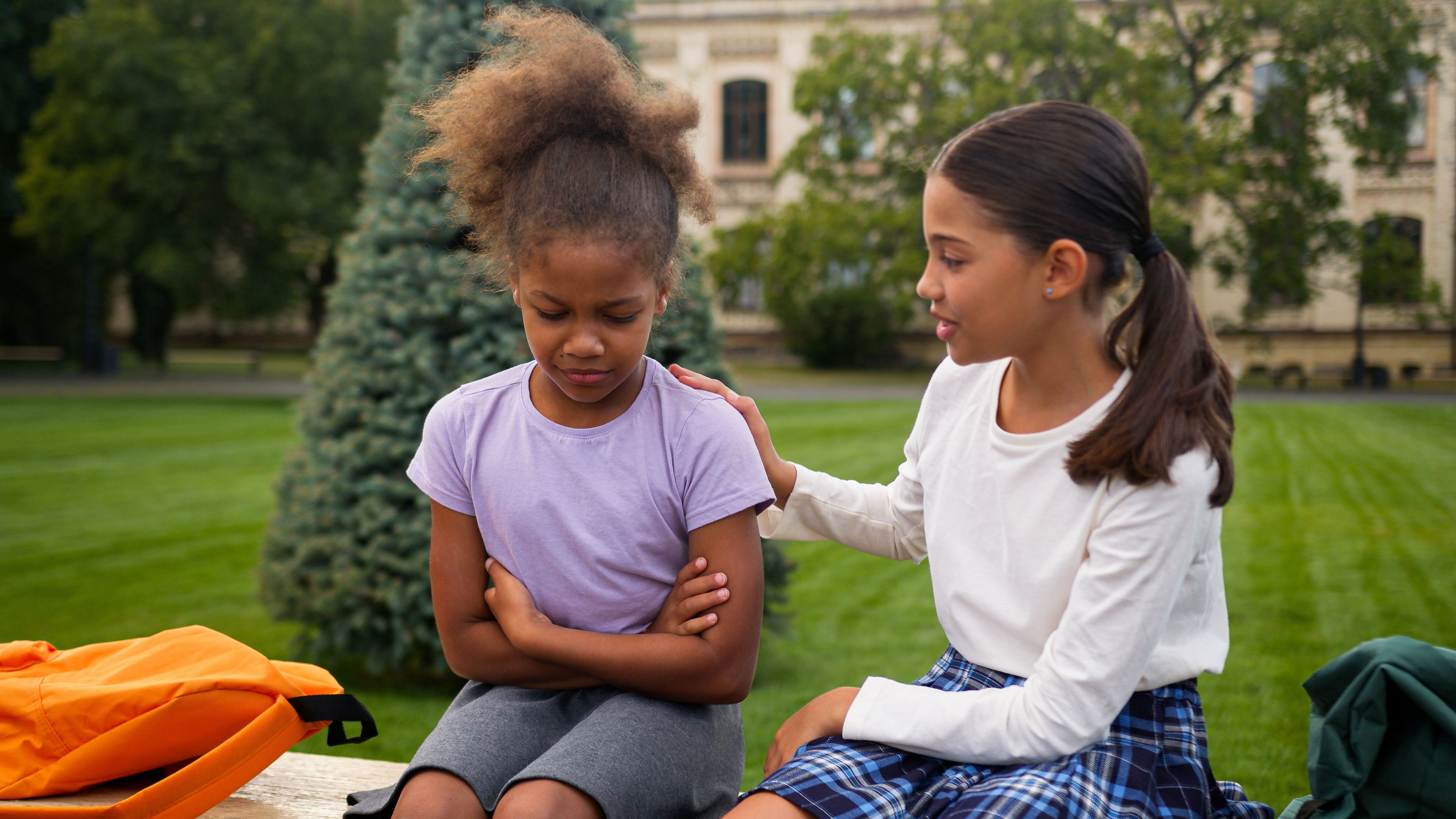
Fall can be filled with failure for our kids.
The first graded thing comes back. Tryouts happen and somebody doesn’t make it. The unit that everyone else finished in two weeks is still sitting on your table in week five. Whatever your family’s version is, September and October are when our child may have to navigate those difficult feelings of failure.
We often respond in one of two ways:
We rescue — we email the teacher, we finish the project at eleven at night, we smooth it over.
Or
We lecture, because we are afraid this is the beginning of a pattern, and the lecture is sometimes us trying to manage our own fear.
Rescuing teaches a child that failure is an emergency. Lecturing teaches them that failure changes how you feel about them. Neither one teaches them how to fall down and get up, which is the actual skill.
“For the righteous falls seven times and rises again.” (Proverbs 24:16)
Notice: it does not say the righteous person avoids falling. It does not say she falls once, learns her lesson, and never falls again. Seven times. The righteousness is not located in the not-falling. It is located in the getting up.
In addition to teaching them this truth for their daily lessons and challenges, we need to teach this in the daily Christian walk as well. There is kind of the connotation that when we fall, we immediately get up again and run to Jesus. The enemy will try to tell us and our kids that we are too bad, too much of a failure, to return to Christ. Or we just feel so bad we hesitate. We must learn to and teach our kids to run back to Jesus as fast as we can. Don't wallow. Don't worry. Don't listen to the lies of Satan. Run back to Jesus' waiting arms.
Our children mostly do not hear this. What they absorb, from school and from us and from the whole culture around them, is that good kids don’t fail. So when they fail — and they will — they don’t conclude “that went badly.” They conclude something about themselves.
Plus, we can teach our children to fall forward — learn from mistakes. Let them help us choose better or to gain understanding and to draw closer to God.
Failure can be doubled in our houses. For a lot of our kids, failure is not an occasional event. It is every day, in something, visibly, in front of people. A child who fails at something daily does not need a pep talk about grit and perseverance. They need a place to land and feel safe while regrouping.
Which brings us to the thing this whole month has been building toward, and the thing I most want your children to know.
Their worth was never sitting in the thing they can’t do.
I want to be careful here, because there is a Christian platitude waiting in this exact spot and I don’t want to hand it to you. I am not going to tell you that your child’s hardest thing is secretly a gift. Sometimes it is just hard. Sometimes it is a loss, and it should be allowed to be a loss, and a child who is told to be grateful for it learns to lie about their own life.
What I will say is that the difficulty was never the measure. God did not weigh your child, find the deficit, and adjust their value accordingly. A child who understands that in their bones can fail at reading, at kickball, at making friends, at the thing everyone else does easily — and it will hurt, and it will not tell them who they are.
Three things that help:
Name the failure plainly. Do not soften it into nothing. “Yeah. That didn’t go well.” Children can tell when we are managing them, and being managed is lonelier than being told the truth.
Clearly state the truth. “You failed that test. You are not a failure. Those are two different things, and I need you to hear both of them.” It feels obvious to you. It is not obvious to them.
Tell them your own failures, including the endings. Not the polished testimony version — the actual one, with the part where it took a long time and you were not sure it would be fine. Children need evidence that a person can fall down seven times and still be someone worth being.
This is where courage stops being about hard conversations and starts being about ordinary days. And ordinary days are exactly where we are headed next month, when we look at what discipleship looks like in the middle of a regular week.
The Family PEACE Challenge is seven days of small shifts — built for the moments right after something has gone wrong, which is usually when it matters most.